Behind every successful trade on a trading platform, there is an intricate piece of technology doing the heavy lifting: the matching engine. This system is responsible for matching buy and sell orders, ensuring that trades are executed fairly and efficiently. Matching engines and order book, the two key components of trading, are taken a closer look at in this article.
What is matching engine?
What is matching engine?
A matching engine is a system that matches buy and sell orders on a trading platform. It is responsible for ensuring that trades are executed at the best possible price and that all orders are processed in a fair and timely manner.
What is order book?
What is order book?
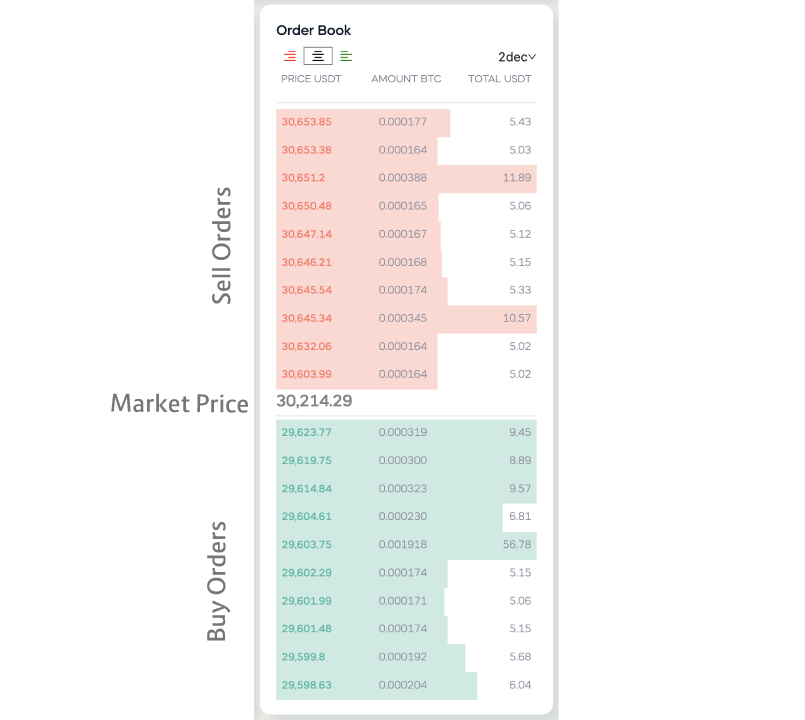
An order book is a list of all the buy and sell orders that have been placed on a trading platform. It is a critical component of the matching engine, as it allows the matching engine to quickly and efficiently find matching orders.
The order book is typically divided into two parts: the buy side and the sell side. The buy side lists all the buy orders that have been placed on the platform, and the sell side lists all the sell orders that have been placed on the platform.
History of matching engines
History of matching engines
The first matching engines were based on open outcry. Open outcry is a method of trading where traders shout their buy and sell orders in a physical trading pit. The matching engine would then match the orders based on the shouts of the traders.
Open outcry was the standard way of trading for centuries. However, it had a number of drawbacks. For example, it was difficult to trade large volumes of orders in a timely manner, and it was also prone to human error.
In the 1980s, electronic matching engines began to replace open outcry. Electronic matching engines are much faster and more efficient than open outcry, and they are also less prone to human error.
Matching engines and order book today
Matching engines and order book today
Today, matching engine softwares are the standard way of trading on all major trading platforms. They are essential for ensuring that trades are executed fairly and efficiently, and they play a critical role in the smooth operation of trading platforms. These softwares are much more reliable and faster than open outcry.
Maker and taker Orders
Maker and taker Orders
Maker orders add liquidity to the market by being placed in the order book. Taker orders remove liquidity from the market by matching with maker orders. An order can be both a maker and a taker. For example, if you place an order for 100 ABC, and %60 of order is matched, your order will be a maker for the %60 that were matched. The remaining %40 will be added to the order book, and your order will become a taker for future matches.
A fair and efficient way to match orders: price-time priority
A fair and efficient way to match orders: price-time priority
Price-time priority matching is a matching algorithm that prioritizes orders based on their price and the time at which they were placed. This means that orders with the best price will be matched first, and if there are multiple orders with the same price, the order that was placed earliest will be matched first. The match price is the price of the maker order.
Here is an example of how the price-time priority matching algorithm works:
Let’s say that the following orders are placed in an order book:
- Sell order (O1): Price 100, quantity 20, placed at 10:00 AM
- Sell order (O2): Price 99, quantity 20, placed at 10:01 AM
- Sell order (O3): Price 100, quantity 10, placed at 10:02 AM
At 10:05 AM, a buy order with price 105 and quantity 45 is placed. The buy order will match with the sell orders in the following order:
- O2: O2 has the lowest price, so it will be matched first. The entire quantity of O2 will be matched, and the buy order will have 45–20 = 25 units remaining.
- O1: O1 has the same price as O3, but it was placed earlier. So, it will be matched next. The entire quantity of O1 will be matched, and the buy order will have 25–20 = 5 units remaining.
- O3: O3 is the only remaining sell order, so the buy order will match with 5 units of O3. The buy order will be completed, and O3 will be partially matched.
The final state of the order book will be as follows:
- O2: Price 99, quantity 0
- O1: Price 100, quantity 0
- O3: Price 100, quantity 5
Conclusion
Conclusion
The basic concepts of matching engines, order books, and matching rules are introduced in this article. Some of the challenges that must be addressed when designing and implementing a matching engine have also been discussed.
The technical background and architecture design of high-throughput, consistent, and efficient matching engines will be explained in the next article.
I hope this article has provided you with a good introduction to the world of matching engines. If you are interested in learning more, please read the next article in this series.